Managing Global Customer Inquiries: Multilingual Support Solutions for Hotels

Imagine this: It is 3:00 AM in your hotel’s home city, but for a guest arriving from Tokyo or Berlin, it is the peak of their planning window. They have a complex request regarding accessibility, local transport, or specific dietary requirements. If your response arrives eight hours later—or worse, is routed through a clunky translation tool that misinterprets "continental breakfast" as something entirely different—you haven't just lost a communication point; you've lost a conversion. In the luxury hospitality sector, the distance between a "booked" status and a "bounce" is often measured in the quality of the first interaction.
For hotels generating significant annual revenue, the challenge isn't just about having a staff that speaks three languages. It is about building a scalable, scalable infrastructure that ensures every global guest feels like your most important VIP, regardless of their native tongue. This is where the intersection of hospitality and growth engineering becomes critical.
The Friction Point: Why Traditional Support Fails the Global Guest
Most hotels rely on a "hybrid" support model: a few multilingual staff members who are often overwhelmed, and basic translation plugins that lack the nuance of cultural etiquette. For a high-revenue establishment, this creates a dangerous bottleneck. When a guest perceives a language barrier, their trust in the service quality drops. They begin to wonder: "If they can't communicate clearly now, how will they handle my stay?"
The cost of this friction is measurable. It manifests as lower conversion rates on direct booking inquiries and a dip in guest satisfaction scores. To break this cycle, hotels must move away from reactive translation and toward proactive, AI-driven communication ecosystems.
Revolutionizing Guest Relations with AI Agents
The modern solution to global inquiries isn't hiring fifty more agents; it's deploying sophisticated AI Agents that operate with the nuance of a seasoned concierge. Unlike the chatbots of five years ago—which were essentially glorified decision trees—modern AI agents leverage Large Language Models (LLMs) to understand context, sentiment, and cultural nuance.
Instantaneous Multilingual Capability
By integrating AI Agents, hotels can provide instantaneous, fluent responses in over 100 languages. This isn't just about literal translation; it's about localization. An AI agent can distinguish between the formal tone required for a guest from Japan and the more direct communication style preferred by a guest from the United States, ensuring the brand voice remains consistent yet culturally resonant.
24/7 Availability Without the Overhead
Growth engineering is about maximizing output while optimizing costs. Instead of maintaining a global graveyard shift of support staff, AI agents handle the heavy lifting of FAQs, booking modifications, and general inquiries. This allows your human team to focus on "high-touch" hospitality—the moments that require genuine human empathy and complex problem-solving.
The Ecosystem of Efficiency: Integrating Payments and Perks
A multilingual inquiry is rarely just about information; it is usually a prelude to a transaction. The friction occurs when a guest is convinced to book via a chat interface but is then redirected to a clunky, single-currency payment gateway that doesn't support their local method.
Seamless Financial Transitions
To truly unlock growth, the communication layer must be tied to a streamlined payment system. When a guest inquires about a luxury suite in Mandarin and decides to book, the transition to payment should be invisible. By implementing localized payment options, hotels reduce cart abandonment and increase the average transaction value.
Upselling via Intelligent Personalization
Multilingual support is the perfect gateway for increasing RevPAR (Revenue Per Available Room). AI agents can identify opportunities to offer exclusive perks—such as airport transfers, spa packages, or curated city tours—based on the guest's profile and language. Imagine a guest inquiring about a romantic getaway; the AI can seamlessly suggest a champagne welcome package, presented in the guest's native language, creating an emotional connection before they even step foot in the lobby.
Strategic Use Cases for High-Revenue Hotels
How does this look in practice? Let's examine three scenarios where 4Geeks' growth engineering approach transforms operations.
1. The Pre-Arrival Concierge
A guest from Brazil books a suite. Three days before arrival, they have questions about local customs and transportation. Instead of waiting for an email reply, they interact with an AI agent that provides real-time advice in Portuguese. The agent then suggests a private car service (a premium perk), which the guest books instantly via a localized payment link. Result: Increased ancillary revenue and a delighted guest.
2. The High-Volume Event Coordination
A hotel hosts an international tech conference. Suddenly, 500 guests from 20 different countries are asking about WiFi passwords, breakfast times, and luggage storage. A human team would collapse under this volume. AI agents handle 95% of these queries instantly, ensuring that the lobby remains calm and the staff remains focused on guest experience rather than repetitive data entry.
3. The Global Payroll and Staffing Shift
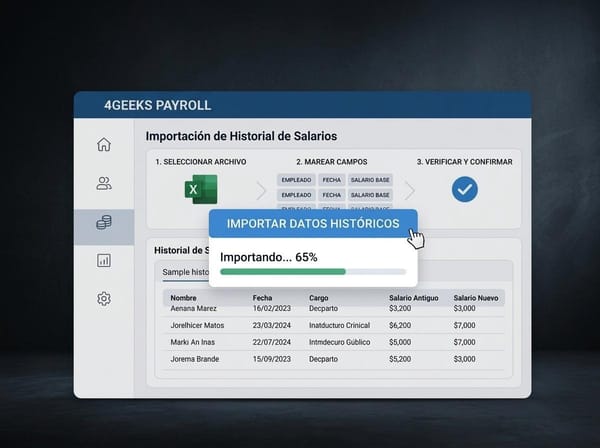
As hotels expand their digital capabilities, they often hire remote specialists to manage these systems. Utilizing a streamlined payroll solution allows the hotel to manage a globalized team of growth engineers and digital managers without the administrative nightmare of cross-border tax compliance. This operational agility is what separates industry leaders from laggards.
Measuring Success: The Growth Engineering Metrics
In the world of professional B2B management, "better guest experience" is a goal, but "increased conversion" is a metric. When implementing multilingual AI solutions, hotels should track the following:
- Lead-to-Booking Conversion Rate: The percentage of multilingual inquiries that result in a confirmed reservation.
- Average Response Time (ART): Reducing this from hours to milliseconds.
- Ancillary Revenue per Guest: Measuring the uptick in perks sold through AI-driven suggestions.
- Customer Acquisition Cost (CAC): Lowering the cost of acquiring international guests by automating the top-of-funnel communication.
Conclusion: The Future of Hospitality is Borderless
For hotels operating at scale, language should be a bridge, not a barrier. The transition from traditional support to an engineered growth ecosystem is no longer optional—it is a competitive necessity. By leveraging AI Agents to handle the complexity of global communication and integrating these with seamless payment and perks systems, hotels can ensure that every guest feels seen, heard, and valued.
The goal is not to replace the human touch that makes hospitality special, but to remove the digital friction that prevents that touch from happening. When the logistics are handled by intelligent systems, your staff is free to do what they do best: provide legendary service.
Ready to scale your global guest experience? Stop letting language barriers cap your growth. Let 4Geeks help you implement a world-class growth engineering strategy tailored for the luxury hospitality market. Discover how our AI Agents can transform your customer inquiries into lifelong loyalists today.